
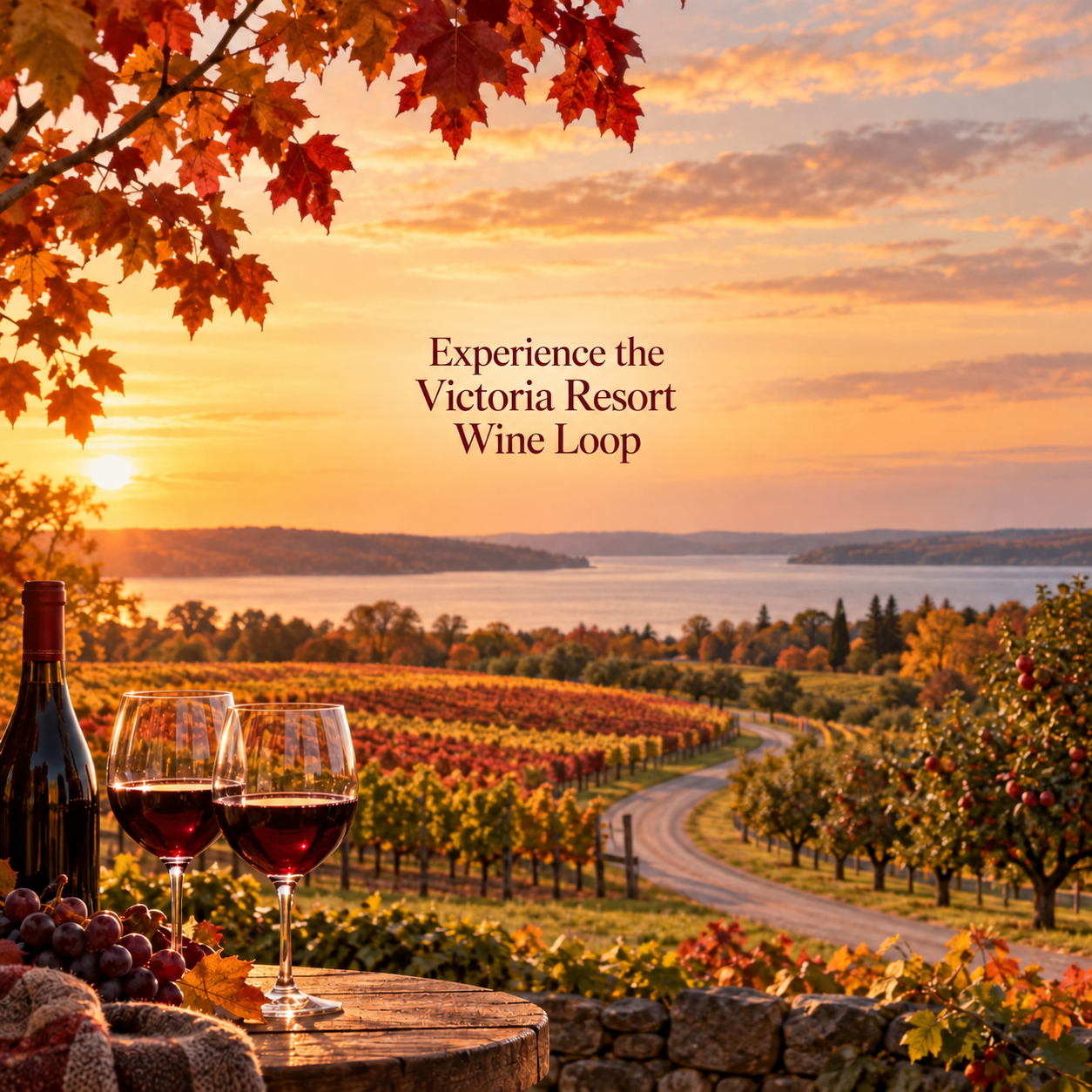
Experience the Victoria Resort Wine Loop

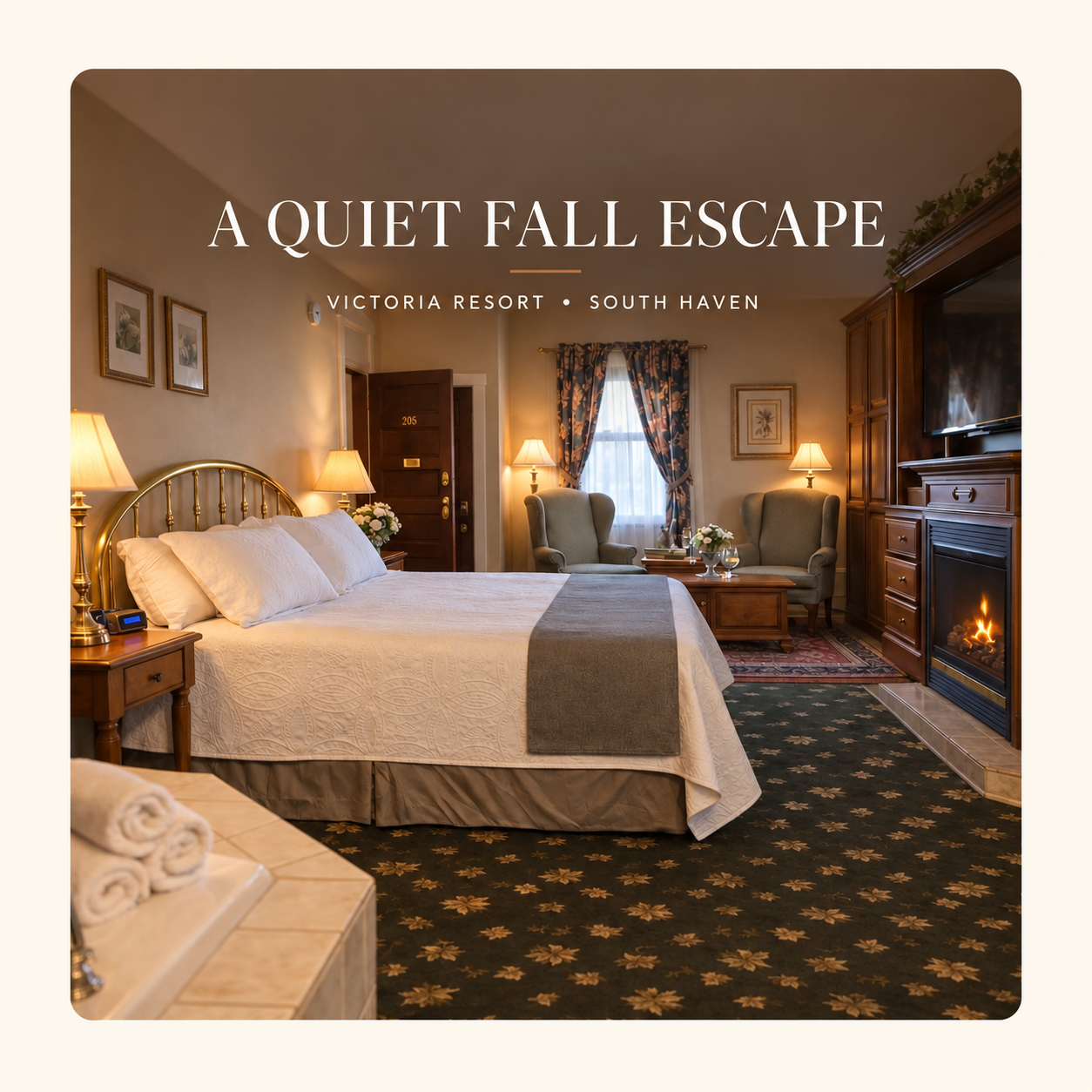
A Quiet Fall Getaway Near Lake Michigan


Presented by Victoria, Your South Haven Weekend Guide

Why Even the Strongest Healers Need Healing

Victoria Resort: South Haven's Wedding Weekend Destination Your wedding is one of the few times in life when everyone you love is in the same place. Parents. Grandparents. College roommates. Childhood friends. Family from across the country. It may be the only time they're all together. So why let it last only a few hours? At Victoria Resort , we believe your wedding deserves more than one day.We believe it deserves an unforgettable wedding weekend. More Than a Place to Stay Victoria Resort isn't a traditional wedding venue. We're a wedding weekend destination . A place where your closest family and friends stay together, celebrate together, and enjoy an entire weekend instead of just attending a ceremony. Instead of watching everyone drive away after the reception, imagine spending three days making memories with the people who matter most. That's what makes a wedding weekend so special. Friday: Your Story Begins Guests begin arriving throughout the afternoon. Instead of checking into different hotels, everyone settles into one beautiful property with 10 charming Bed & Breakfast rooms and 7 private cottages , accommodating up to 50 overnight guests . The weekend begins naturally. Some guests relax by the heated pool. Others organize a friendly pickleball tournament. Families gather around the picnic tables while the grills are fired up. Children run across three beautifully landscaped acres. Grandparents finally have time to catch up with grandchildren. No schedules. No rushing. Just time together. As evening arrives, everyone gathers for your rehearsal dinner. Stories are shared. Toasts are made. Excitement builds. Then everyone takes the short walk to beautiful Lake Michigan . The sky turns brilliant shades of orange, pink, and gold. Your photographer captures a sunset photo experience unlike anything that can happen on a busy wedding day. The laughter. The anticipation. The people who traveled hundreds of miles to celebrate with you. These become part of your favorite photographs—not because they're perfectly posed, but because they're real. Back at the resort, everyone gathers around the fire. A glass of Victoria Resort Signature Wine , crafted exclusively for our couples by the award-winning Fenn Valley Vineyards , is poured. The conversations continue. Tomorrow is your wedding. But your celebration has already begun. Saturday: Celebrate Without the Rush Everyone wakes up together. Coffee. Breakfast. One more walk. One more laugh. One more memory before the ceremony. Because everyone is already together, the day feels relaxed instead of rushed. Whether your wedding celebration takes place at Victoria Resort or another beautiful South Haven location, you've already experienced something many couples never do. Time. Sunday: The Weekend Doesn't End With the Reception Instead of saying goodbye after the last dance... You share one more breakfast. One more cup of coffee. One more family photo. One more hug. Your guests leave feeling like they were part of something much bigger than a wedding. They were part of an unforgettable weekend. The Victoria Resort Difference Most places offer a wedding venue. Victoria Resort offers a wedding weekend destination. Our resort is designed for couples who want to turn one special day into three unforgettable days. Here you'll find: 10 Bed & Breakfast guest rooms 7 private cottages Accommodations for up to 50 overnight guests Heated outdoor pool Dedicated pickleball courts Three beautifully landscaped acres Gas fire pit and traditional wood-burning fire pit Picnic tables and BBQ grills Just a short walk to Lake Michigan and downtown South Haven We can also be part of your: Welcome gathering Rehearsal dinner Family barbecue Wedding celebration Farewell brunch Planning Is Simple Tell us about your dream wedding weekend. We'll create a customized proposal designed around your family, your guests, and your celebration. Once your proposal is complete, you'll be paired with your own Personal Wedding Assistant , who will guide you from your first planning conversation until the last guest checks out. You'll have one dedicated person helping make your wedding weekend everything you've imagined. Stretch Your Wedding Day Into a Wedding Weekend Years from now, your guests probably won't remember every centerpiece or every song that played. They'll remember the Wedding. Friday night's Lake Michigan sunset. The rehearsal dinner. Victoria Resort Signature Wine around the fire. The pickleball games. The breakfast conversations. The laughter that lasted all weekend long. Because the best weddings aren't remembered for a single day. They're remembered for the time families spent together. That's what a wedding weekend destination is all about.
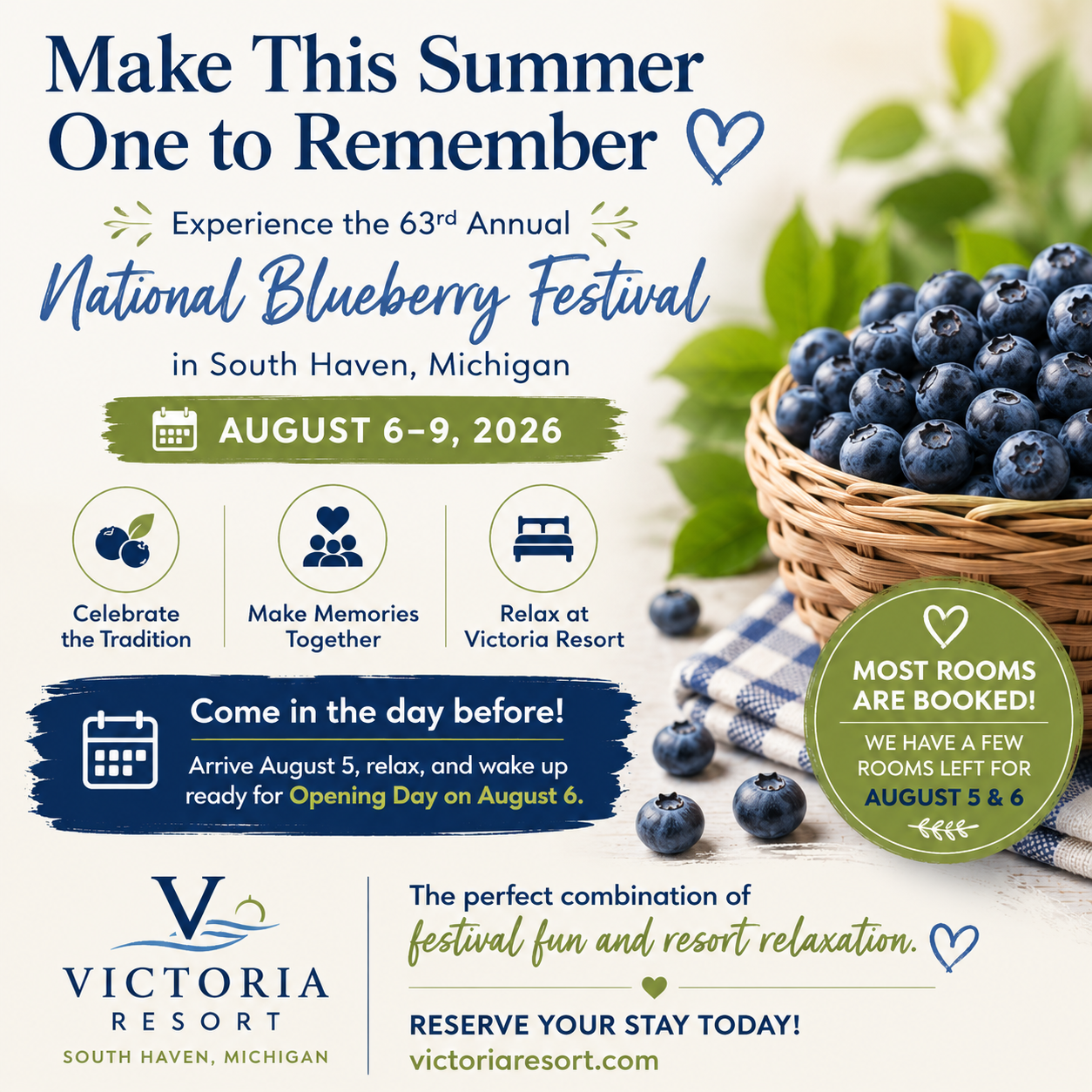
National Blueberry Festival 2026 in South Haven: Your Guide to the Sweetest Weekend at Victoria Resort Looking for the perfect place to stay during the National Blueberry Festival in South Haven, Michigan? Victoria Resort puts you just minutes from all the excitement while giving you a peaceful place to unwind at the end of each day. If you're planning a South Haven getaway August 5–6, 2026 , now is the perfect time to reserve your stay. Experience the National Blueberry Festival in South Haven The 63rd Annual National Blueberry Festival returns August 6–9, 2026 , celebrating South Haven's title as the Blueberry Capital of the World . Every August, thousands of visitors travel to Southwest Michigan for four unforgettable days of food, music, shopping, and family fun. During the festival you'll enjoy: 🫐 Fresh Michigan blueberries and blueberry treats 🎉 The famous Blueberry Parade 🎨 More than 175 artisan vendors 🎶 Live music throughout downtown 🥞 Blueberry pancake breakfasts 🎡 Carnival rides and family activities 🍺 Riverfront entertainment 🛍️ Downtown shopping and sidewalk sales 🚜 Farm Day at local blueberry farms It's one of the most anticipated summer events in Michigan—and one your family will remember long after the weekend is over. Stay Just Minutes from the Festival Imagine waking up just minutes from downtown South Haven. Enjoy breakfast, spend the day exploring the Blueberry Festival, then return to Victoria Resort to relax by the pool, walk to Lake Michigan for sunset, gather around the fire pit, or unwind with a game of pickleball. You don't have to choose between excitement and relaxation. At Victoria Resort, you can enjoy both. Get a Head Start on the Festival Most rooms in South Haven are already booked for Blueberry Festival weekend—but there's still time to make it your summer getaway. We have a few guest rooms still available for August 5 & 6. We recommend arriving on Wednesday, August 5 , so you can settle in, enjoy a relaxing evening at the resort, and wake up refreshed for Opening Day of the National Blueberry Festival on Thursday, August 6 . Instead of spending opening morning driving into town, you'll already be here—ready to experience the festival from the very beginning. It's the perfect way to start one of South Haven's biggest weekends of the year. More Than a Festival—A Tradition The best vacations aren't remembered because you saw everything. They're remembered because of the moments you shared together. Laughing while watching the parade. Finding the perfect handmade gift at the craft fair. Sharing warm blueberry donuts. Watching your kids with blueberry-stained smiles. Walking back to your room after an unforgettable summer day. These are the moments that become family traditions. Reserve Your Blueberry Festival Getaway As of today, we have just a few rooms remaining for August 5 & 6. Once they're reserved, they're gone. If you've been looking for the perfect excuse to visit South Haven, this is it. We'll provide the place to relax. South Haven will provide the celebration. You bring the people you love. Reserve your Blueberry Festival getaway at Victoria Resort today and make this summer one you'll never forget. 🫐💙

Blueberry Picking Isn't About the Berries. It's About the Memories. Vacations have a way of slowing life down. For a few hours, the phones stay in your pocket. The schedule disappears. The conversations last a little longer. That's why one of our favorite summer recommendations for Victoria Resort guests isn't an attraction—it's an experience. Spend a Morning at DeGrandchamp's Blueberry Farm Just minutes from Victoria Resort, DeGrandchamp's Blueberry Farm has opened its U-Pick fields, with Bluecrop and Bluehaven blueberries now ready to harvest. Grab a bucket, wander through the rows together, and enjoy one of Southwest Michigan's most beloved summer traditions. Whether you're visiting as a couple, with friends, or bringing the whole family, blueberry picking is one of those simple experiences that often becomes the highlight of the trip. A Simple Plan for an Unforgettable Day Start your morning with breakfast at Victoria Resort. Then head to the blueberry fields while the air is cool and the berries are at their best. Laugh over who fills their bucket first. Taste a few berries along the way. Snap a family photo between the rows. These aren't just blueberries you'll take home. They're memories. Bring Summer Back to Your Cottage After your visit, enjoy your fresh blueberries back at the resort. Sprinkle them over breakfast. Enjoy them by the pool. Bake your favorite dessert in your cottage kitchen. Or simply sit around the fire pit sharing a bowl together as the sun goes down. Sometimes the best part of vacation isn't doing more. It's slowing down enough to enjoy the moment you're in. Before You Go 🫐 U-Pick varieties: Bluecrop & Bluehaven Blueberries 📍 Please note: The U-Pick fields are located across the road from the Farm Store. 🕗 Open Daily: 8:00 AM – 6:00 PM Your Story Starts Here At Victoria Resort, we believe the best vacations aren't built around checking attractions off a list. They're built around moments that bring people closer together. A bucket of fresh blueberries may seem like a small thing today. But years from now, you'll remember who was standing beside you while you picked them. That's the kind of memory worth bringing home.

Pick More Than Peaches. Pick a Summer You'll Remember The best vacations aren't measured by how much you do. They're measured by the moments you remember long after you return home. One of those moments might be standing beneath a peach tree, reaching up for a perfectly ripe peach, while someone you love fills a basket beside you. Just minutes from Victoria Resort, the first Flaming Fury #1 peaches of the season are ready for U-Pick. Sweet, juicy, and perfect for eating fresh, they're only available while supplies last—making now the perfect time to experience one of Southwest Michigan's favorite summer traditions. Fill Your Basket with Michigan's Best Whether you're picking fruit together or shopping in the farm market, you'll discover some of the freshest flavors of the season. U-Pick 🍑 Flaming Fury #1 Peaches 🫐 Duke Blueberries Farm Market Favorites Fresh peaches Blueberries Sweet and sour cherries Red and black raspberries Apricots Apples Fresh asparagus Farm-fresh eggs Honey, maple syrup, jams, salsas, and more Before you leave, don't forget to stop by the bakery for fresh donuts, cookies, and a refreshing apple cider slushie. Slow Down and Stay a While The farm isn't just a place to buy fruit. It's a place where kids laugh on wagon rides, grandparents watch from a shaded bench, friends compete on the playground, and families meet the animals before heading back to fill another basket. With wagon rides, an animal barn, playground, barrel train, bounce houses, and plenty of open space to explore, it's easy to spend an entire afternoon making memories together. A Vacation You'll Talk About for Years At Victoria Resort, we believe the best trips aren't built around checking attractions off a list. They're built around experiences that bring people together. Picking peaches becomes baking a cobbler together back at your cottage. Fresh blueberries become tomorrow morning's breakfast. A box of warm donuts becomes dessert around the campfire. These are the simple moments that become family traditions. Make It Part of Your Victoria Resort Stay If you're visiting Victoria Resort this week, add a trip to the farm to your itinerary. Spend the morning picking fresh peaches and blueberries, enjoy the bakery and farm attractions, then head back for an afternoon at the pool or an evening watching the sunset over Lake Michigan. Because years from now, you probably won't remember what day you picked the peaches. You'll remember who was standing beside you. Farm Hours: Daily from 10:00 AM–5:00 PM , including holidays, rain or shine.